
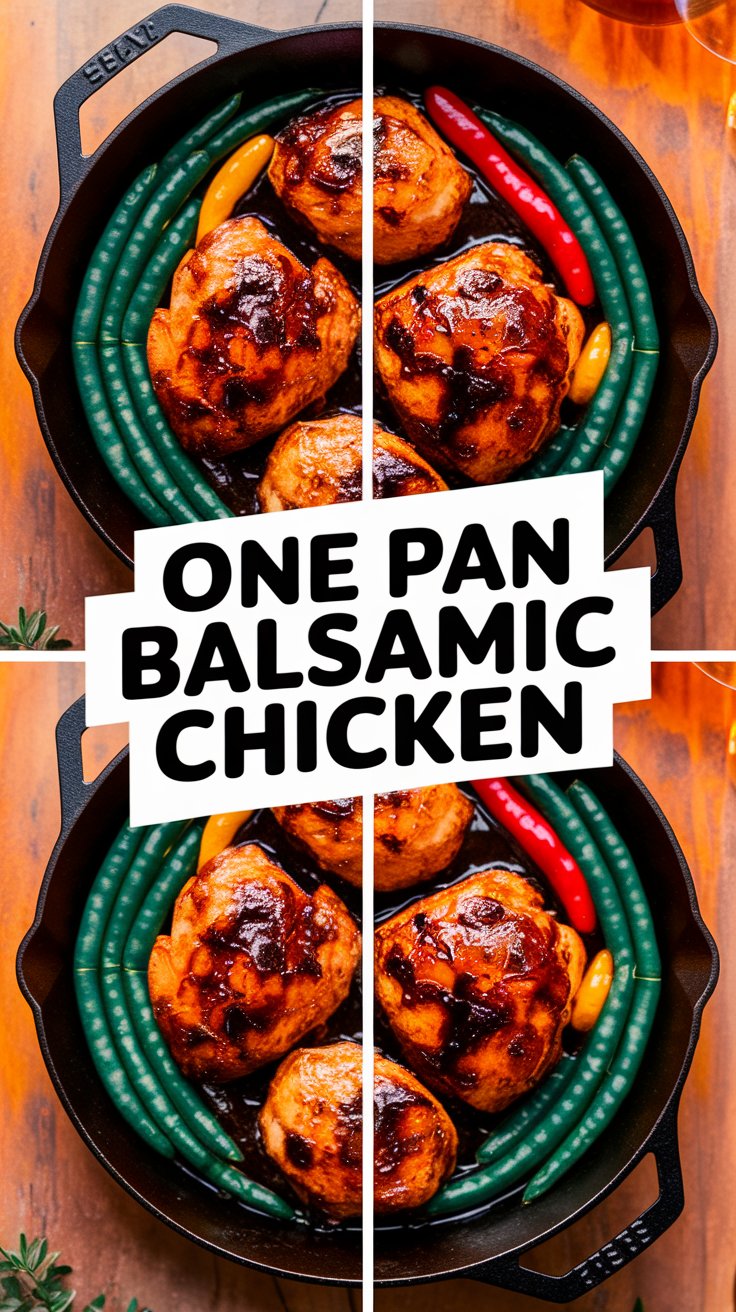
Cooking at home should feel rewarding, not exhausting. In real life, most of us want meals that are simple, reliable, and genuinely delicious—without a sink full of dishes afterward. That is exactly where One Pan Balsamic Chicken shines. This recipe is designed for busy households, beginner cooks, and anyone who values bold flavor with minimal effort.
Unlike many rushed chicken dinners that turn out dry or bland, this dish focuses on technique, balance, and timing. The sweet acidity of balsamic vinegar, the gentle richness of olive oil, and the natural juices of chicken combine into a glaze that tastes far more complex than the effort required.
This guide is not just a recipe. It is a complete, experience-driven cooking resource that explains why each step works, how to adjust it for your kitchen, and how to make it better than most versions found online.
Why One Pan Balsamic Chicken Deserves a Place in Your Weekly Rotation
1. True One-Pan Convenience
Everything cooks together in a single pan—protein, vegetables, and sauce. This saves time, energy, and cleanup, making it perfect for weeknights.
2. Balanced, Crowd-Pleasing Flavor
Balsamic vinegar delivers tang, sweetness, and depth without overpowering the dish. Even picky eaters tend to enjoy this flavor profile.
3. Consistently Juicy Chicken
With the right temperature and sauce ratio, the chicken stays moist instead of drying out—a common issue in baked chicken recipes.
4. Flexible Ingredients
You can easily adapt this recipe to what you already have in your fridge without compromising taste or texture.
What Makes This Recipe Better Than Typical Versions
Many balsamic chicken recipes fail in three ways:
- Too much vinegar, resulting in bitterness
- Overcooked chicken breasts
- Watery sauce that never thickens
This version avoids those issues by:
- Using a balanced balsamic-to-sweetener ratio
- Cooking at a precise oven temperature
- Allowing natural reduction during baking
The result is a glossy, flavorful glaze that coats the chicken and vegetables evenly.
Ingredients Breakdown and Purpose
Chicken
Boneless, skinless chicken breasts are ideal for even cooking. Chicken thighs can be used for a richer result, but cooking time will vary.
Balsamic Vinegar
Choose a well-balanced balsamic vinegar—not overly acidic. Avoid very cheap varieties, as they can taste harsh once baked.
Natural Sweetener
Honey or maple syrup rounds out the acidity and helps the sauce caramelize naturally in the oven.
Olive Oil
Adds richness and protects the chicken from drying out during roasting.
Garlic and Herbs
Fresh garlic and dried oregano build a savory base that supports the balsamic without overpowering it.
Vegetables
Bell peppers, zucchini, cherry tomatoes, onions, and green beans work particularly well because they roast evenly and absorb flavor.
Ingredient Measurements (Optimized for Flavor)
- 4 boneless, skinless chicken breasts
- 1/3 cup balsamic vinegar
- 2 tablespoons honey or maple syrup
- 2 tablespoons olive oil
- 4 cloves garlic, minced
- 1 teaspoon dried oregano
- Salt and black pepper, to taste
- 2 to 3 cups mixed vegetables
- Fresh basil or parsley, for garnish
Step-by-Step Instructions with Professional Technique
Step 1: Preheat with Purpose
Preheat your oven to 400°F (200°C). This temperature allows the sauce to reduce while cooking the chicken thoroughly.
Step 2: Build the Sauce
In a bowl, whisk together balsamic vinegar, honey, olive oil, garlic, oregano, salt, and pepper. The mixture should taste slightly sweet and tangy, not sharp.
Step 3: Prepare the Pan
Lightly grease a large baking dish or sheet pan. Arrange the chicken with space between each piece to ensure even cooking.
Step 4: Coat and Surround
Pour the sauce over the chicken, turning each piece to coat. Add vegetables around the chicken rather than on top.
Step 5: Bake
Bake uncovered for 25–30 minutes, flipping the chicken halfway if desired. The internal temperature should reach 165°F (75°C).
Step 6: Rest and Finish
Allow the chicken to rest for 5 minutes. Garnish with fresh herbs before serving.
How to Prevent Dry Chicken Every Time
- Avoid overbaking
- Use evenly sized chicken pieces
- Let the chicken rest before slicing
- Do not overcrowd the pan
Best Vegetables for Balsamic Chicken
Vegetables that roast well at high heat include:
- Zucchini
- Bell peppers
- Red onion
- Cherry tomatoes
- Green beans
Root vegetables should be par-cooked before adding.
Flavor Variations You Can Trust
Mediterranean Style
Add olives and a sprinkle of feta after baking.
Spicy Version
Include red pepper flakes or chili paste.
Herb-Forward Version
Use fresh thyme or rosemary instead of oregano.
Low-Carb Option
Serve with cauliflower mash or roasted broccoli.
Serving Suggestions
- Steamed rice or quinoa
- Garlic mashed potatoes
- Fresh green salad
- Crusty bread to soak up sauce
Storage and Meal Prep Tips
- Refrigerate leftovers for up to 3 days
- Reheat gently in the oven or skillet
- Not recommended for freezing due to sauce texture
Common Mistakes to Avoid
- Using too much balsamic vinegar
- Skipping the sweetener
- Baking at too low a temperature
- Overcrowding the pan
Frequently Asked Questions
Can I use chicken thighs?
Yes, but increase cooking time by 5–8 minutes.
Can this be cooked on the stovetop?
Yes, use a covered skillet and reduce sauce separately if needed.
Is this recipe gluten-free?
Yes, naturally gluten-free.
Why does my sauce taste bitter?
Low-quality vinegar or over-reduction can cause bitterness.
Nutrition Overview (Estimated)
- Calories: ~350 per serving
- Protein: ~40g
- Carbohydrates: ~18g
- Fat: ~10g
Values are estimates and may vary.
Final Thoughts: A Recipe Built for Real Kitchens
This One Pan Balsamic Chicken recipe is designed to work—not just look good on paper. It is practical, flexible, and rooted in real cooking experience. With the right balance of ingredients and technique, it delivers restaurant-quality flavor using everyday pantry staples.
